


Fundamental Analysis & Market Sentiment
I wrote on 21st June that the best trades for the week would be:
Long of the USD/JPY currency pair. This pair rose by 0.28% last week.
Long of the NASDAQ 100 Index following a daily close above 30,716. This did not set up.
A summary of last week’s most important data in the market:
US Core PCE Price Index – as expected.
US Final GDP – higher than expected, at an annualized rate of 2.1%.
Canadian CPI (inflation) - higher than expected, with a month-on-month increase of 0.7%. This helped the Loonie maintain its value last week.
Australian CPI (inflation) – lower than expected, with a fall in the annualized rate to only 4.0%, while 4.3% was expected. This was a dovish tilt for the RBA and helped make the Aussie the weakest major currency last week.
Australian Unemployment Rate – as expected, this ticked lower to 4.4%.
While there were a few important data items last which had some effect on the markets as I outlined above, the bigger stories right now are away from macro data and effects. The top story is the strong selloff at the end of last week in semiconductor and technology stocks on a general fear of overvaluation and overbought conditions. This sent some tech-heavy Asian indices, notably the KOSPI Composite in South Korea and the Nikkei 225 in Japan, sharply lower. The technical bull market in tech stocks continues, but it is starting to look shaky. I am on the sidelines here and waiting for the market to stabilize before I consider getting lock of tech stocks again.
Top Regulated Brokers
US Final GDP has given a small hawkish tilt towards the Fed which has kept the US Dollar relatively strong over the past week, but we saw the weaker Australian inflation data help send the Aussie lower.
The other big story is despite the MoU which has been signed by the USA and Iran, Iran has now for two days fired on shipping transiting the Strait of Hormuz, although the MoU’s main provision was the complete reopening of the Strait. The US again retaliated locally in the Hormuz area last night, making it the second round of US military action against Iran since the MoU was completed towards the end of the previous week. Iran also fired at Kuwait and Bahrain. President Trump is again talking about the possibility that he may have to resort completely to military action if Iran is unable to keep to the terms of the MoU, but his threats won’t have much credibility, at least not until after the US mid-term election in the USA in November, and maybe not even then.
Unless something happens to ease tensions, this could lead to crude oil opening higher as the new week gets underway. Also, stock markets might get some more bearish pressure from this event and might even open lower with a weekend gap down.
UK prime minister Keir Starmer announced his resignation, but it is a near-certainty he will be replaced by Andy Burnham, a known quantity, so this will not be likely to have much impact upon the British Pound or the British stock market.
The Week Ahead: 29th June – 3rd July
Next week is relatively light. The coming week’s most important data points, in order of likely importance, are:
US Average Hourly Earnings
US Non-Farm Employment Change
US Unemployment Rate
US ISM Manufacturing PMI
Canadian GDP
It is a public holiday in the USA on Friday, in Italy on Monday, and in Canada on Wednesday.
Monthly Forecast June 2026
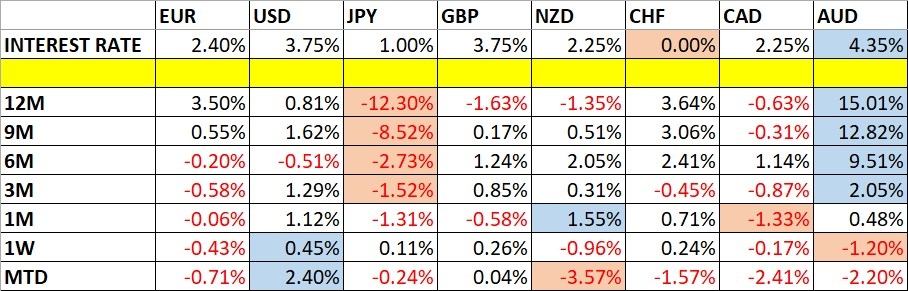
Currency Price Changes and Interest Rates
For the month of June, as there was still no clear trend in the US Dollar, I made no monthly forecast.
For the month of July, I forecast that the EUR/USD currency pair will decline in value, and the USD/JPY currency pair will rise in value.
Weekly Forecast 28th June 2026
Last week, I made no weekly forecast.
This week, I again make no forecast, as there were no exceptional price movements last week.
Volatility increased a bit last week, with 30% of the notable currency pairs and crosses moving by more than 1% in value. Next week’s volatility is likely to remain at a similar level, although it might be concentrated in the US Dollar pairs.
You can trade these forecasts in a real or demo Forex brokerage account.
Technical Analysis
Key Support/Resistance Levels for Popular Pairs
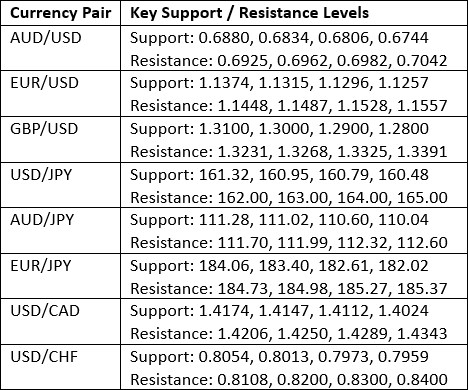
Key Support and Resistance Levels
US Dollar Index
The US Dollar printed a bullish candlestick last week, making it the highest weekly close in 1.25 years, so a valid long-term bullish trend has clearly been established. The factors bulls will find concerning are the notable upper wick and the fact that the high was not only a potentially bearish double top, it was also rejecting for a second time the resistance level at 101.39. It would not be a big surprise if the price struggles to get established above that level.
The new bullishness in the US Dollar is partly due to the Federal Reserve’s more hawkish tilt which it made at its policy meeting two weeks ago. Markets are now expecting the Fed will make a rate hike before the end of 2026. This has sent the greenback and its treasury yields higher. Last week provided a further minor hawkish boost, with higher-than-expected US GDP data released.
I think it makes sense to be attentive to trade opportunities over the coming week which are long of the US Dollar, but if the price is already testing 101.38 it might not move much higher over the short term.
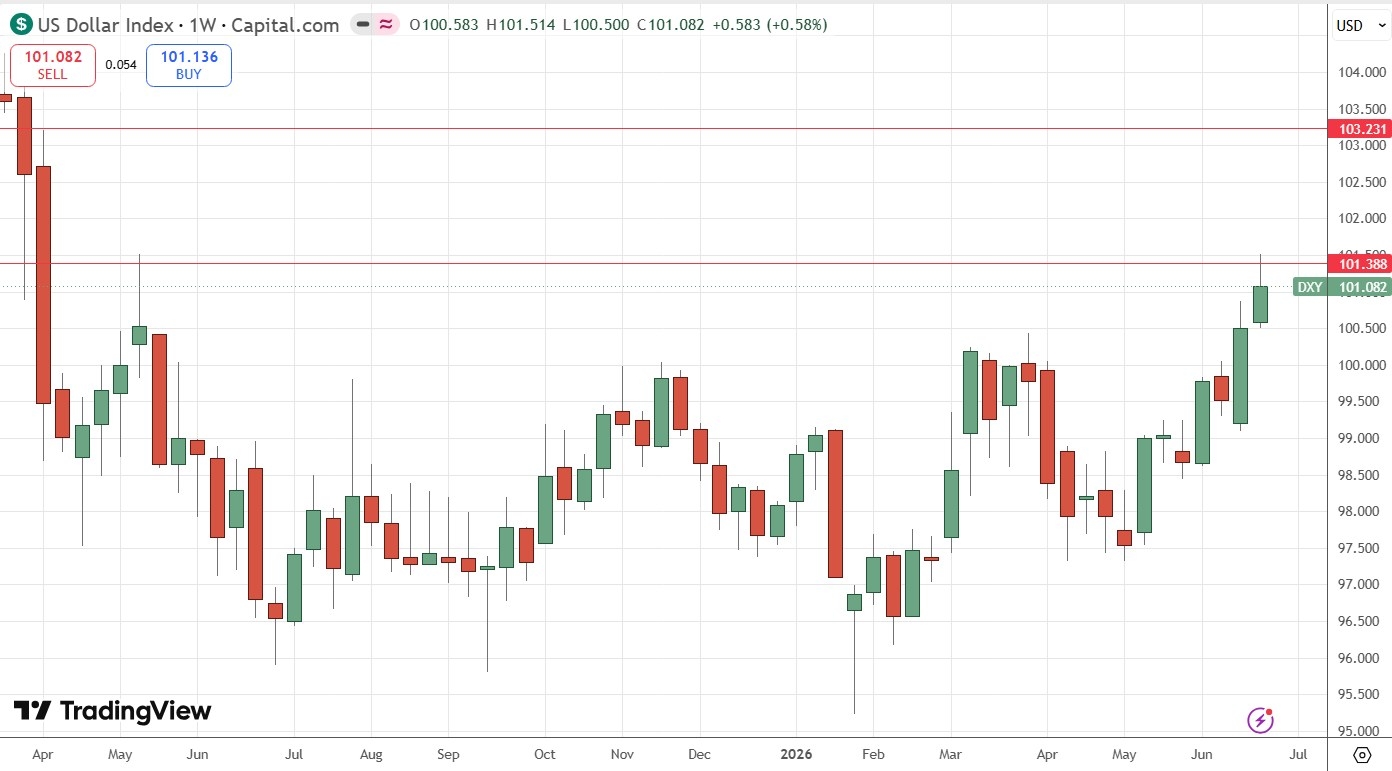
US Dollar Index Weekly Price Chart
USD/JPY
The USD/JPY currency pair followed through a little after its long-awaited bullish breakout two weeks ago, rising weakly to a new near 2-year high price, after weeks of declining volatility.
While my analysis of the US Dollar Index above explains why I am bullish on the Dollar, it does not explain why I would be bearish on the Japanese Yen. The answer is long-term weakness from high national debt levels, but it is also true that the authorities in Japan want to raise rates and just hiked by 0.25%. The Yen is also getting a little bid as money comes out of tech stocks as a safe haven currency to park funds for a while. However, as a longer-term trend trade, this pair still looks good.
The major worry anyone long here should have is whether the Bank of Japan might intervene to try to push the price down, as it already has done a few times in recent history.
It might be that Japan feels it cannot justify intervention when the moves do not look speculative or disorderly but reflect changing fundamentals like the recent hawkish Fed tilt.
Trend traders will be long of this currency pair and I am long also.
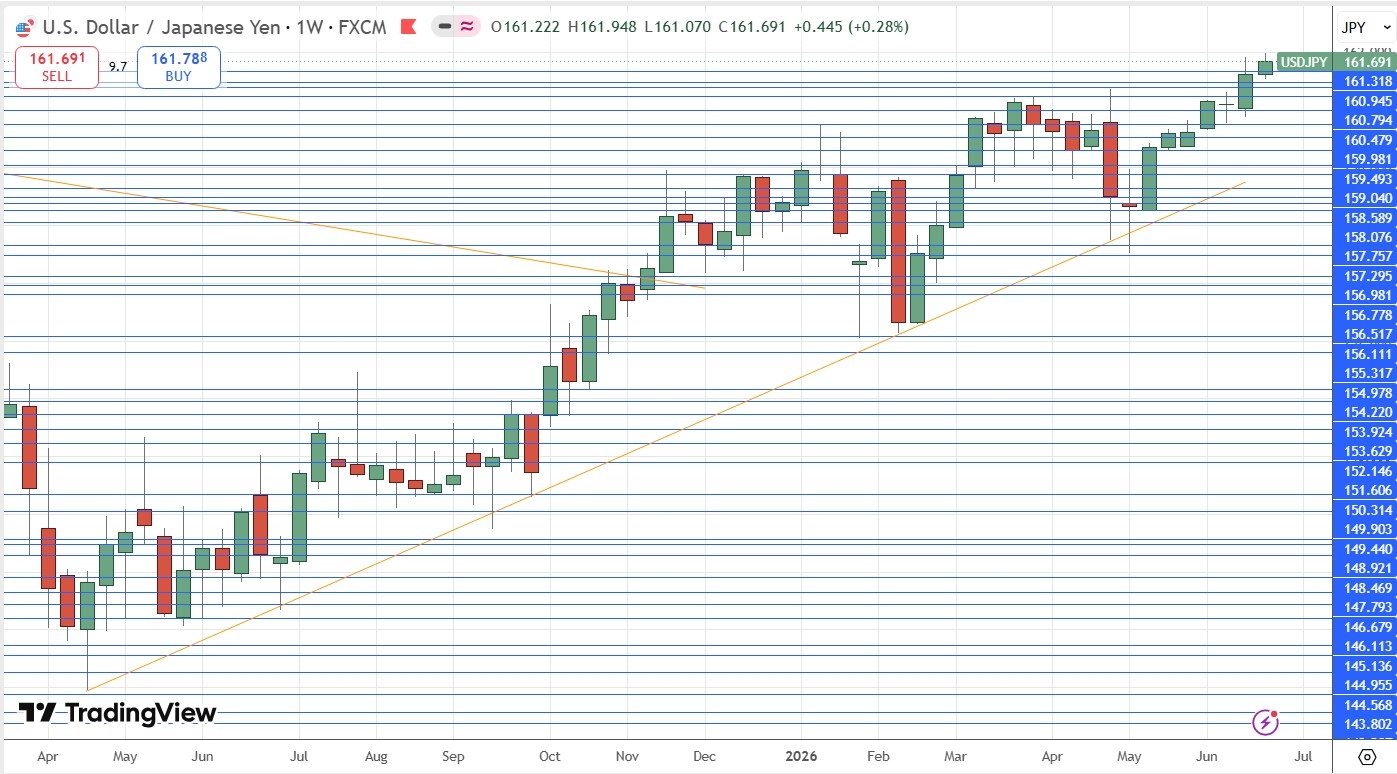
USD/JPY Weekly Price Chart
EUR/USD
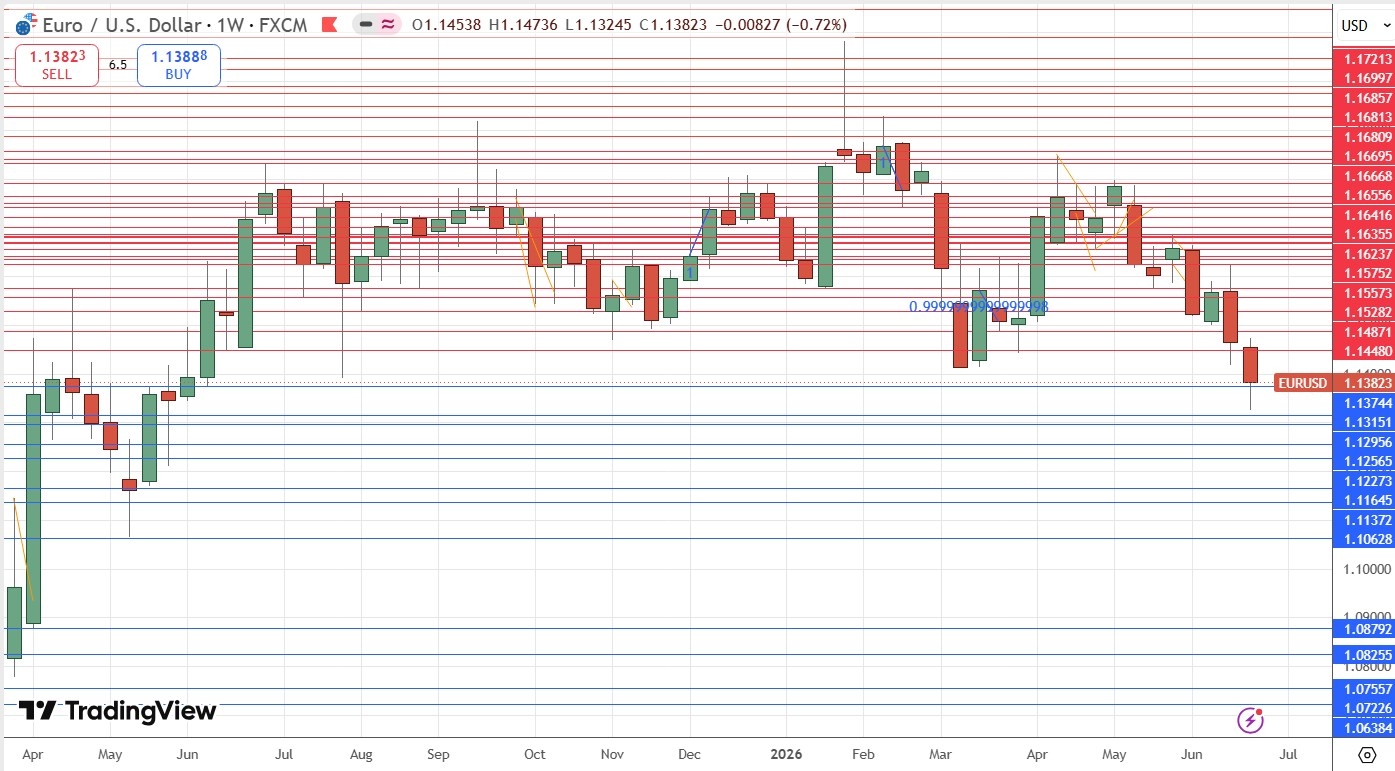
The EUR/USD currency pair made its lowest weekly close in 1.25 years, just like the US Dollar Index. Also just like the Index, it has a wick on the weekly candlestick that could make you a bit nervous about trading with the trend. Despite that, I am short, as this currency has historically trended very reliably. Another factor to consider is that this pair often has deep pullbacks within trends, so don’t worry too much about the lower wick.
There is nothing special going on with the Euro, it has been a relatively stable currency in recent months – not one of the big movers.
Due to its propensity to trend and a strong US Dollar breaking out to new long-term highs, I am happy to be short of this currency pair.
More conservative traders might want to wait for the price to get established below $1.1374 before going short.
EUR/USD Weekly Price Chart
AUD/USD
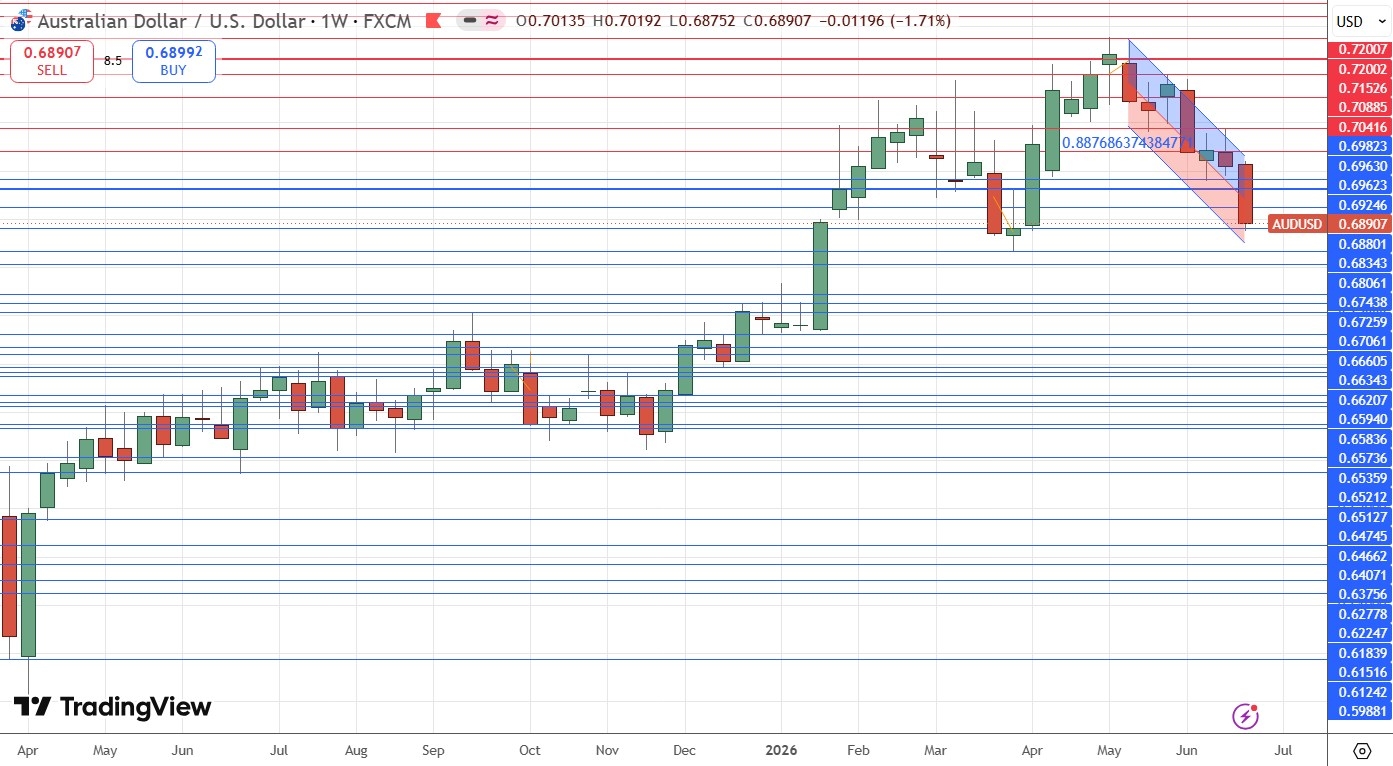
The AUD/USD currency pair dropped strongly last week – it was at the heart of the Forex market, with the US Dollar the strongest currency of last week, and the Australian Dollar the weakest.
The Aussie is being hit by a double whammy: declining risk-on sentiment, but also a sense that the Reserve Bank of Australia is going to be forced into a more dovish tilt regarding rates, which leaves the Aussie unsupported.
Technically, the weekly price chart below shows a bearish descending linear regression analysis holding the price action of the last few weeks, suggesting there is a further drop to come. The short-term bearish momentum and lack of much of a lower wick on the candlestick reinforces that.
I don’t like to trend trade this currency pair, but day traders might want to watch out for short trades here. Just watch out for the bullish inflection point at $0.6834.
AUD/USD Weekly Price Chart
Gold
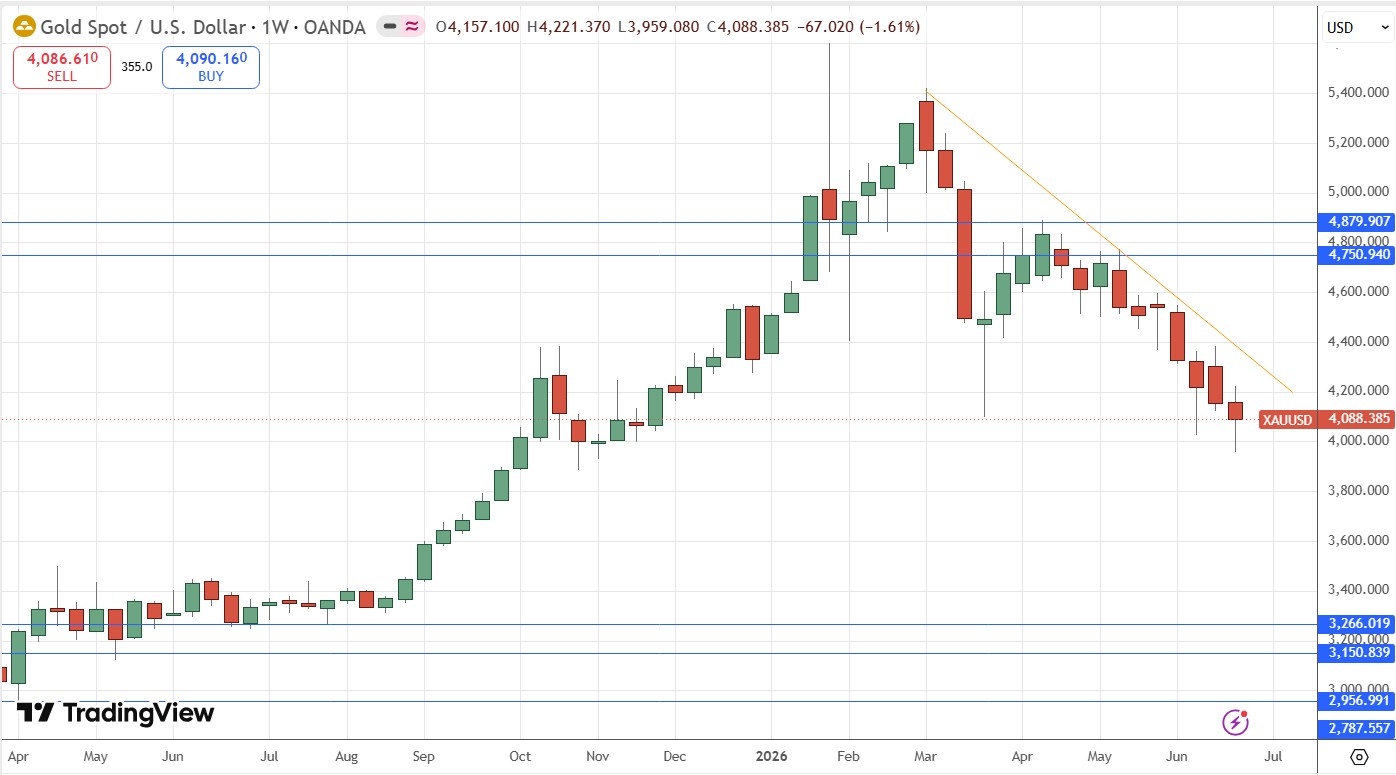
Gold has been descending steadily since the start of March. However, although it is clearly bearish, it has reached an area that was previously supportive just below the $4,000 round number. The descending trend line is suppressing the price, but there are initial signs that things might be about to change.
If you are thinking of buying, it will likely be wiser once the trend line I mentioned is decisively broken. Next week, this trend line will be sitting at about $4,300.
The sustained fall in the value of precious metals is getting a tailwind from the more hawkish policies of central banks which have begun to prevail anew in recent months, most notably the Federal Reserve.
I don’t like to go short of Gold anyway, but in the current price area it looks dangerous to do so. Having said that, there are factors working to send it lower, and a bearish trend.
Gold Weekly Price Chart
Brent Crude Oil Futures
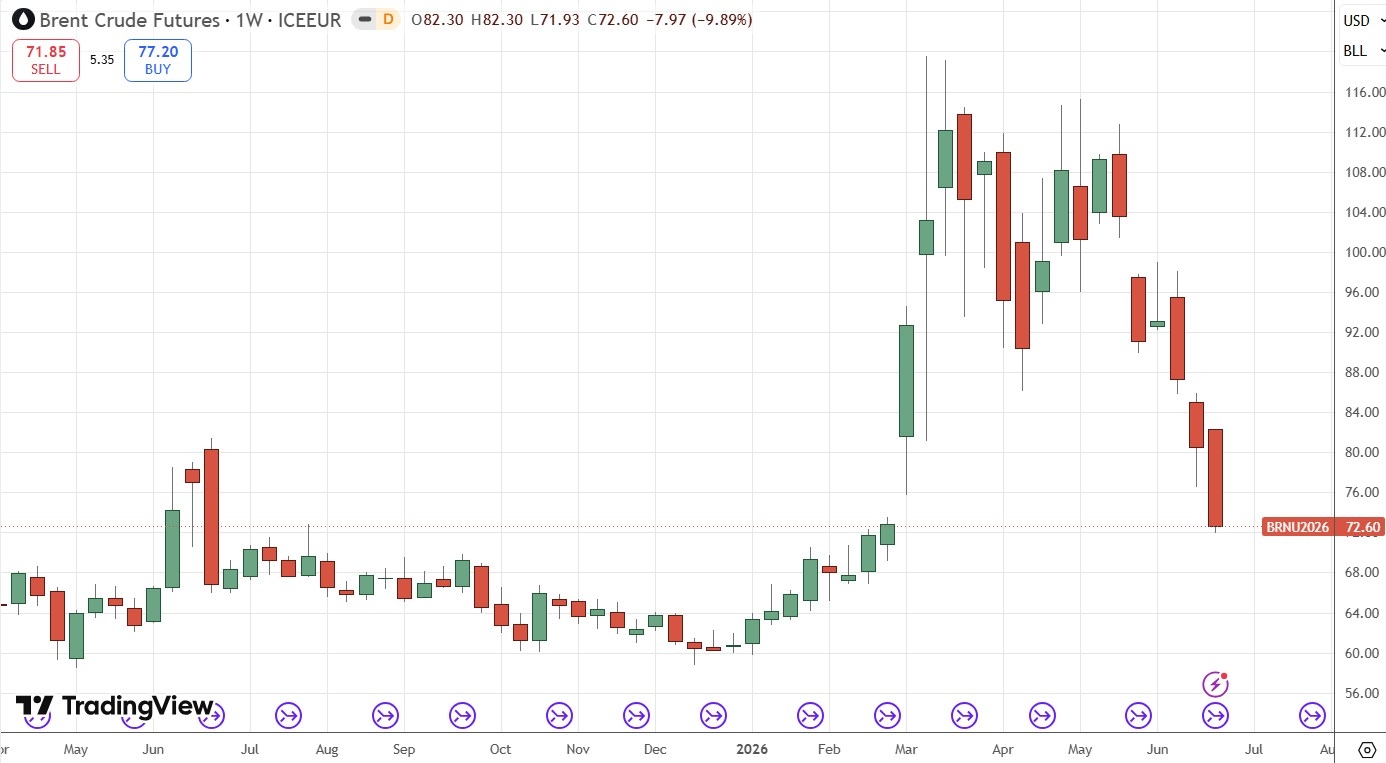
Brent Crude Oil again made its lowest close at the end of last week since the war between the USA and Iran broke out last February. This is not surprising as the belligerents have just signed an MoU and practically the only thing the Americans get out of it is the reopening of the Strait of Hormuz. Progress towards this, and the news of the MoU signing, have driven down the price of crude oil and removed a recessionary and inflationary input into the global economy. Having said that, the past few days have seen more belligerence in the Strait of Hormuz with Iran attacking ships doing things it doesn’t like, and the US retaliating against Iran’s military capabilities in the Strait.
This means it is quite possible Crude Oil could open higher and rebound a bit this week on fears that the Hormuz problem has not been properly taken care of – at least for the 60 days the MoU stipulates.
Looking to the downside, the price has arrived in its pre-war area of comfort, albeit maybe at the higher edge of that. So, it might fall by a few more Dollars, but I think it does not have a lot more room to descend technically.
Brent Crude Oil Futures Weekly Price Chart
Bottom Line
I see the best trades this week as:
Long of the USD/JPY currency pair.
Short of the EUR/USD currency pair.
Ready to trade our weekly Forex forecast? Check out our list of the best Forex brokers.