


Top Regulated Brokers
Institutional buyers have signaled renewed conviction after a multi-week absence, and Bitcoin's price structure now hinges on whether their return represents a durable shift or merely a relief bounce masking deeper seller defense. The market faces an asymmetry: inflows have accelerated, yet technical resistance zones suggest consolidation risk remains high, creating genuine uncertainty about trend durability. This tension between institutional entry signals and structural price friction defines the near-term outlook.
Why Institutional Inflows Matter Now
Bitcoin spot exchange-traded funds captured $1.92 billion in inflows last week, the strongest weekly intake since October 2025, signaling institutional conviction has returned after three weeks of stalled demand. The timing matters: inflows resumed precisely as price approached a major technical zone, suggesting coordinated institutional positioning rather than reactive buying. This confluence of capital inflow and structural resistance creates a dual test of whether institutions have the conviction to sustain positions through price friction, and whether the market structure itself can absorb the volume without triggering consolidation.
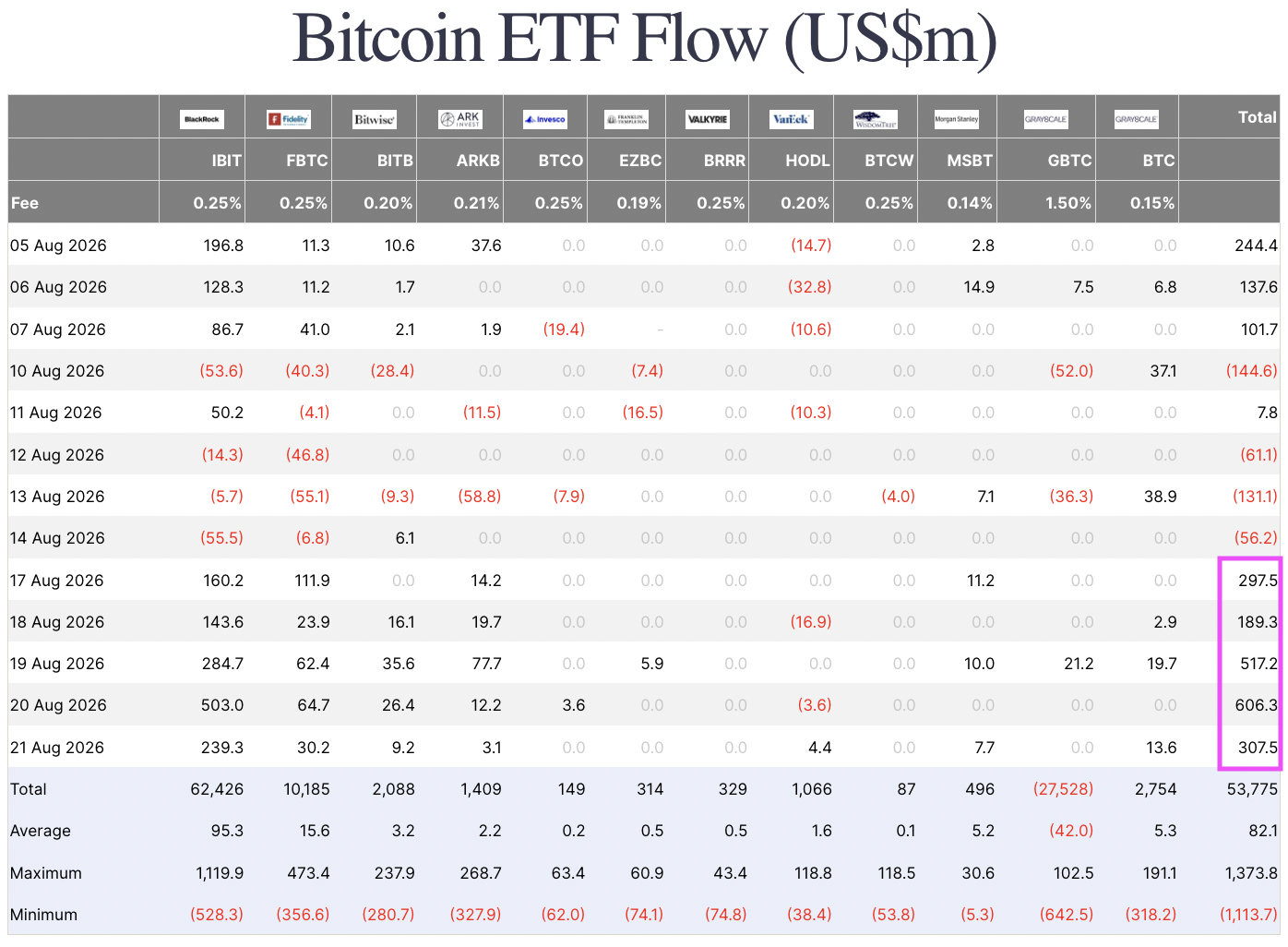
Spot Bitcoin ETF flows table. Source: Farside Investors
The 50-Week Moving Average as Market Inflection
The 50-week exponential moving average has functioned as Bitcoin's primary structural filter: bull rallies that establish support above it typically extend, while relief bounces that fail to hold it tend to reverse. Current price positioning places Bitcoin at this exact inflection, creating a binary technical outcome over the next two weekly closes. A sustained hold would challenge the next resistance band around $80,000; failure would expose deeper support near the 200-week moving average zone below. The stakes are asymmetric: institutional conviction gets tested at this level, not confirmed.
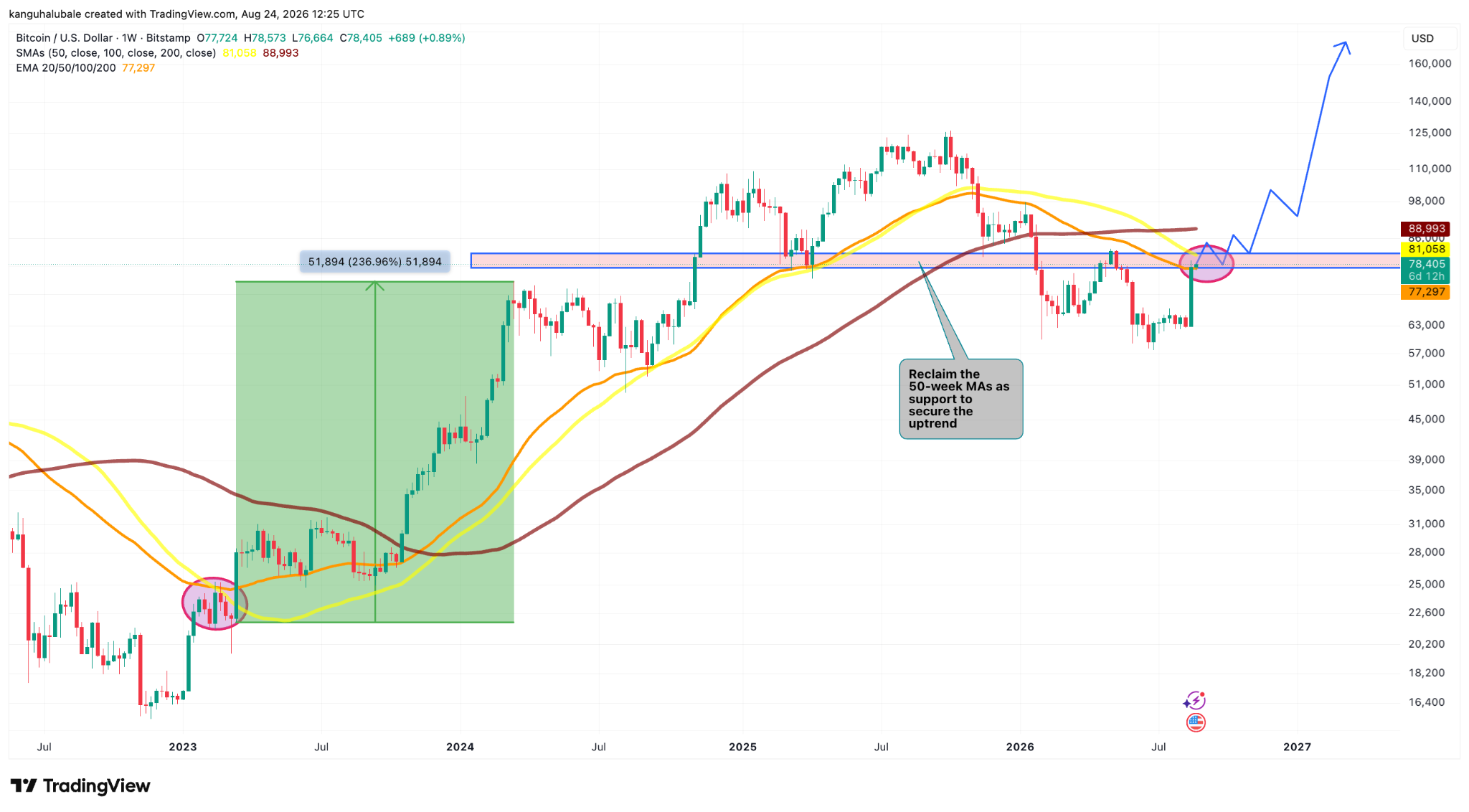
BTC/USD weekly chart. Source: TradingView
Order Book Structure Reveals Seller Persistence
Order book structure contradicts the bullish inflow narrative. Large ask-side walls persist at resistance, and spot volume has not yet reached the conviction levels typical of sustainable breakouts. This mismatch - strong institutional inflows meeting entrenched seller defence - signals that price discovery may require multiple tests before a clean breakout emerges. Retail positioning often interprets inflows as trend confirmation, but order book mechanics frequently expose the friction that deflates euphoric moves into consolidation or shallow pullback.
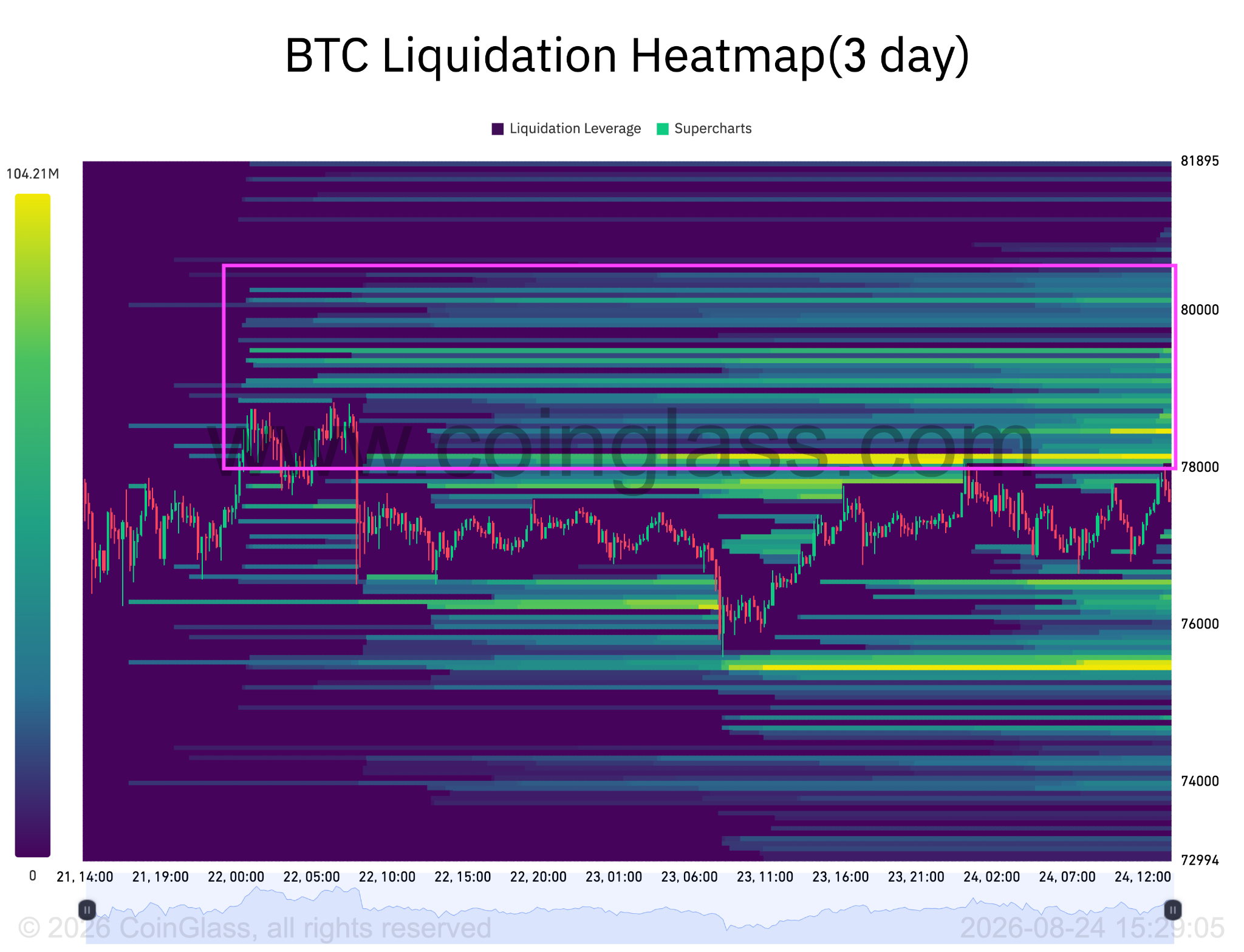
Bitcoin liquidation heatmap. Source: CoinGlass
Behavioural Blind Spots and Unresolved Risks
Three vulnerabilities mask consensus optimism. First: Bitcoin has experienced multiple inflow-driven rallies that subsequently failed at moving average zones, creating false breakout traps. Second: institutional positioning reverses rapidly if macro conditions shift; this inflow trend assumes sustained risk appetite, neither guaranteed in volatile backdrops. Third: early-cycle institutional entry often reflects portfolio rebalancing or tactical hedging, not conviction-driven accumulation. Most critically, inflow peaks historically coincide with price peaks, trapping retail buyers who interpret capital flows as trend confirmation rather than rotation.
What Analyst Commentary Reveals About Consensus
Market commentary splits between inflow optimists and structural skeptics. Bullish participants cite capital flows and consolidation as trend reversal; skeptics highlight absent breakout volume and historical resistance. Consensus leans toward sideways-to-lower if resistance holds, with upside extension contingent on sustained weekly positioning. This analyst restraint (cautious despite positive inflows) suggests the market is pricing in consolidation risk despite institutional entry signals.
Invalidation Parameters
The bullish case breaks decisively if Bitcoin fails to hold the 50-week moving average on a weekly close. Such failure would classify the advance as relief rather than reversal, exposing the market to the 200-week moving average zone below. A secondary invalidation trigger is a breakdown below the prior weekly open, signaling that institutional conviction has stalled against persistent seller defense.
Bitcoin's advance now hinges on institutional resolve at a major moving average inflection point, where inflows and technical resistance create genuine uncertainty about trend durability. Consolidation remains the base case despite positive capital flows, as order book structure reveals persistent seller defence that could deflate enthusiasm into shallow pullback. The next two weekly closes will clarify whether this represents structural trend reversal or merely institutional rebalancing masking deeper market repair.