


The crypto market lost ground across most of the field as the weekend approached. Bitcoin (BTC) carried the weight of the broader decline, while Uniswap (UNI) and Cardano (ADA) moved against the prevailing direction. Previously hot tokens like SUI and Hyperliquid (HYPE) landed on the weaker side of the divide, once again resulting in a split market.
That split looks as though it will persist for a while. The harder question is whether the holdouts are finding real demand or merely taking longer to follow the crowd. The next several sessions should give that tension room to resolve, but the current evidence leaves both possibilities open.
The final Saturday snapshot placed total crypto market capitalization near $2.20 trillion according to CoinMarketCap, with moderate downward pressure as the weekend rolled on. 17 of the top 100 assets had positive seven-day returns, 82 were negative, and one was unchanged. A cap-weighted reconstruction was down about 2.1%.
Top Regulated Brokers
Meanwhile, Bitcoin dominance remained close to 58.5%, offering little support for a broad altcoin rotation. DeFiLlama showed USD-pegged stablecoin circulation slipping about 0.7% over seven days. Stablecoin supply remains an imperfect liquidity proxy.
The strong pockets stayed narrow. UNI led the liquid established names, while ADA and BNB also held gains. HYPE, NEAR, and much of the broader field remained under pressure. Reported turnover remained sharply below Friday, leaving participation quieter rather than clearly stronger.
Crypto Winter Chop Continues as Breadth Remains Weak
The overall market conditions continue to favor traders and dishearten hodlers. Data provided by TradingView's Coinbase feed shows Bitcoin closed the Saturday candle at near $62,850, down about 3.5% from its July 24 open near $65,051.
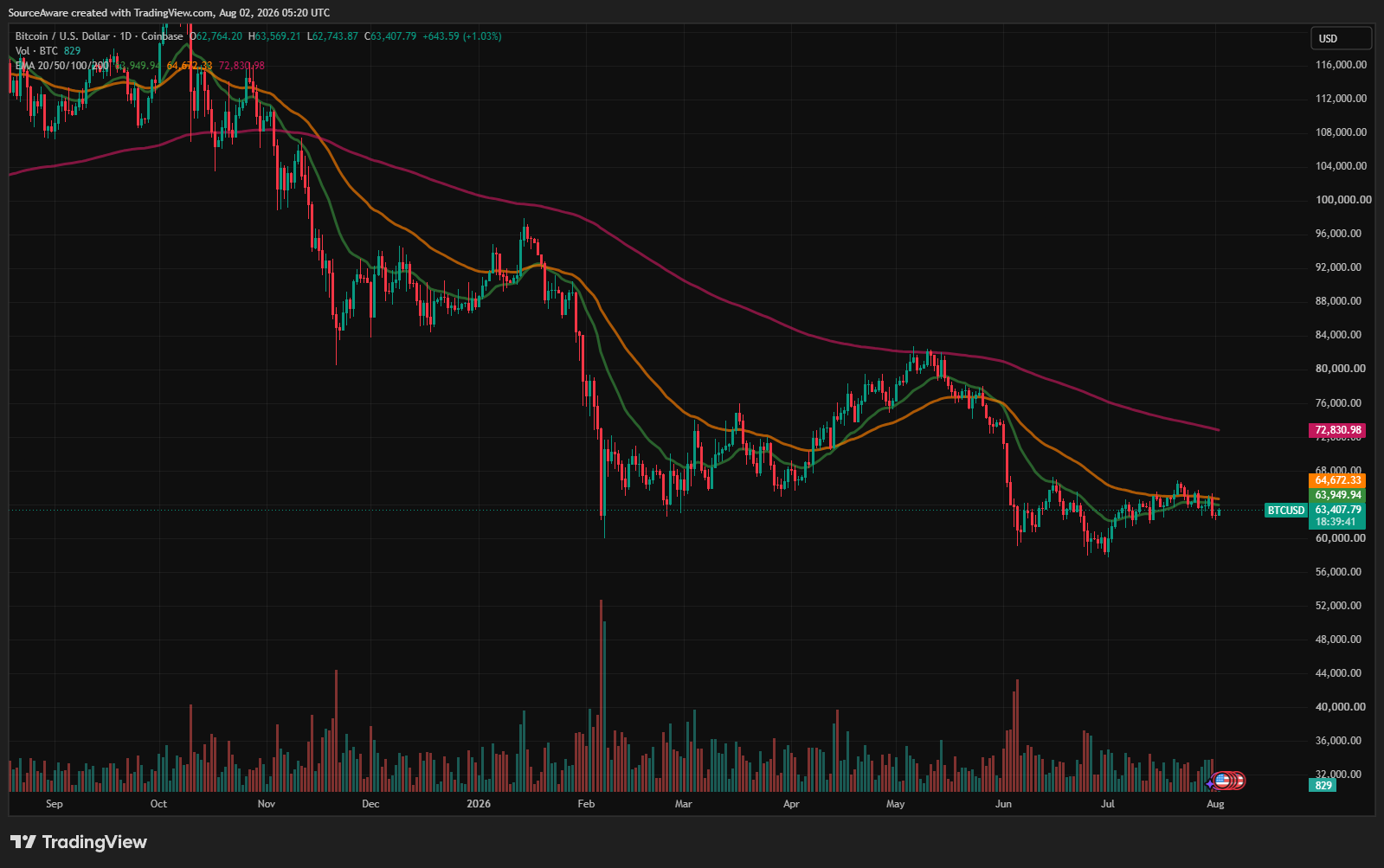
BTC/USD 1-day chart. Source: TradingView.
The Saturday low bounced off support at $62,300, which has held through repeated attempts over the past week. Sunday has gotten off to a strong start for bulls, and at the time of writing, BItcoin trades at $63,407, a decrease of 1.55% on the 7-day chart.
With its price trading below both the 20-day and 50-day moving averages, bears have the strong upper hand, trend wise. A return above the 50-day average would improve the short-term structure. Continued trading below both averages, especially alongside weak breadth, would keep the wider market dependent on isolated leaders.
By contrast, Uniswap remained one of the clearest exceptions, although its lead narrowed during Saturday. TradingView's Coinbase feed showed UNI near $4.16, up about 12% from the July 24 open of $3.755. Its observed range extended from $3.608 to $4.571.
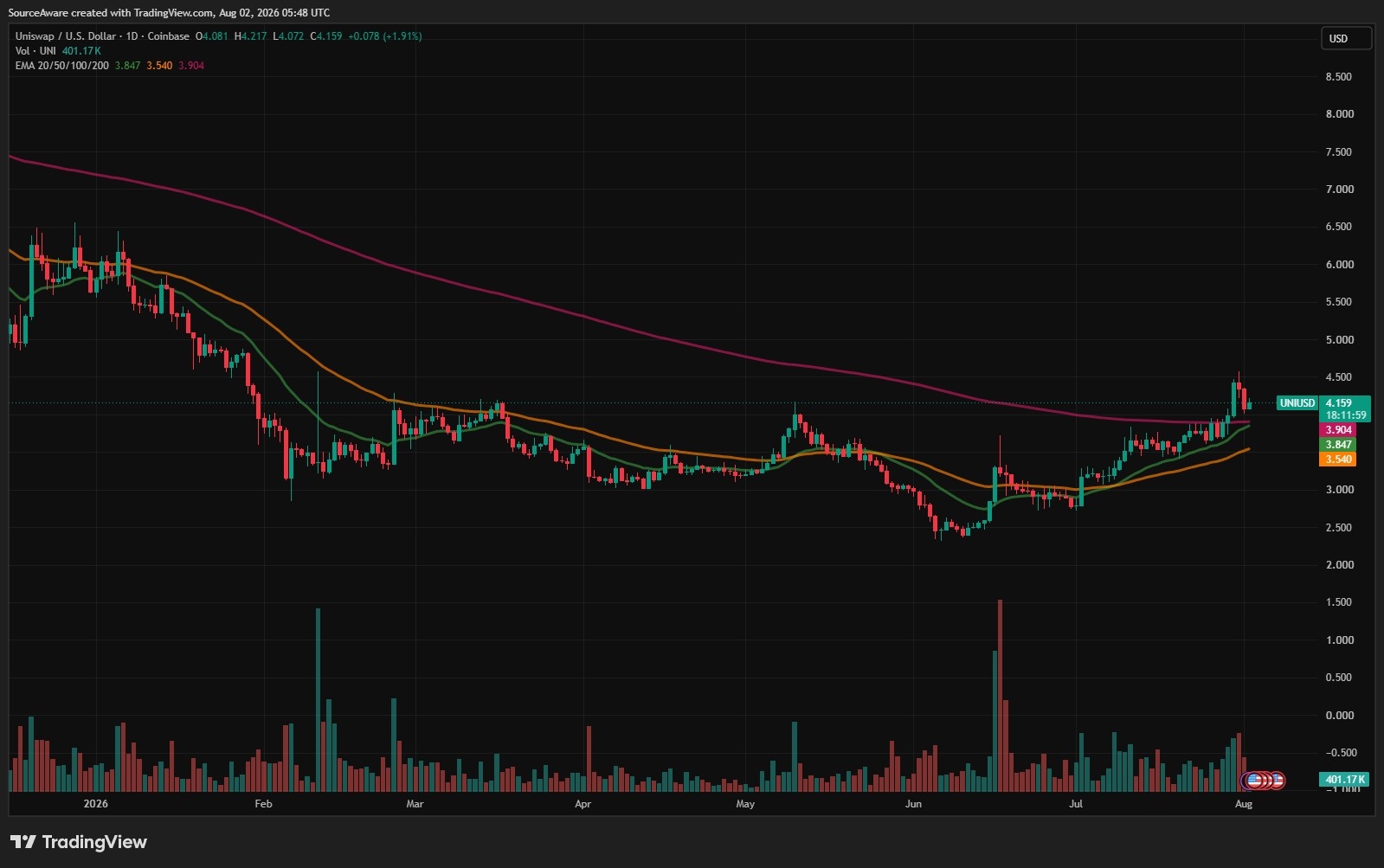
UNI/USD 1-day chart. Source: TradingView
No primary-source catalyst was verified for the move, though the token and ecosystem have been gaining momentum since a change in the fee structure provided more benefits for UNI holders.
The defensible claim ends with price behavior: UNI gained while most top-ranked assets declined, and it held above both the 20-day and 50-day averages at the snapshot. That is clear relative strength. Another week is needed to show whether participation spreads to other established DeFi assets or remains concentrated in UNI.
Cardano (ADA) began showing strength on Tuesday after bouncing off a low of $0.1538. At the time of writing, bulls have now pushed it to $0.185, with their sights set on challenging resistance at $0.20.
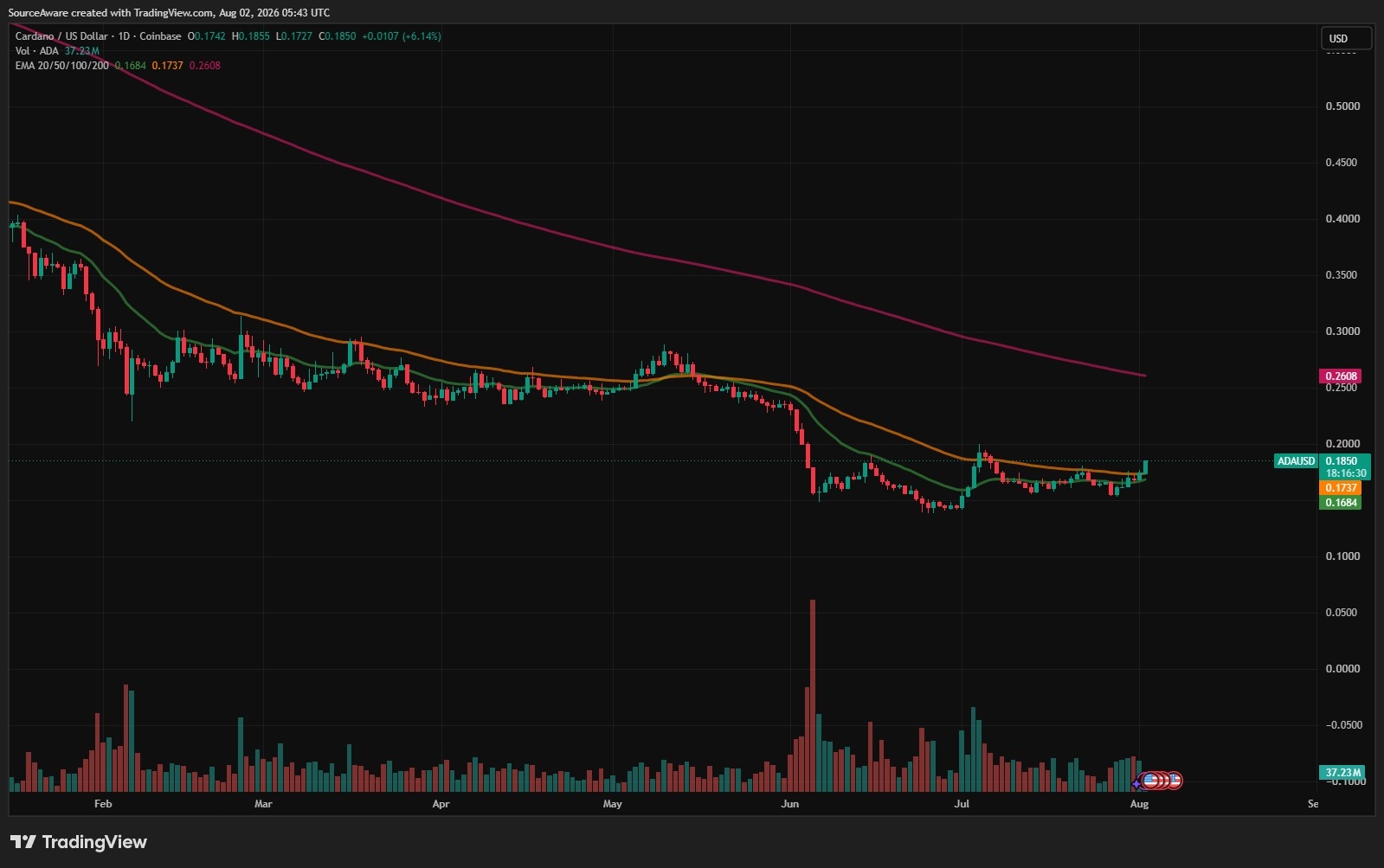
ADA/USD 1-day chart. Source: TradingView.
On the opposite end of the altcoin spectrum was Hyperliquid (HYPE), which hit a low of $51.51 on Saturday, a weekly decline of more than 10%.
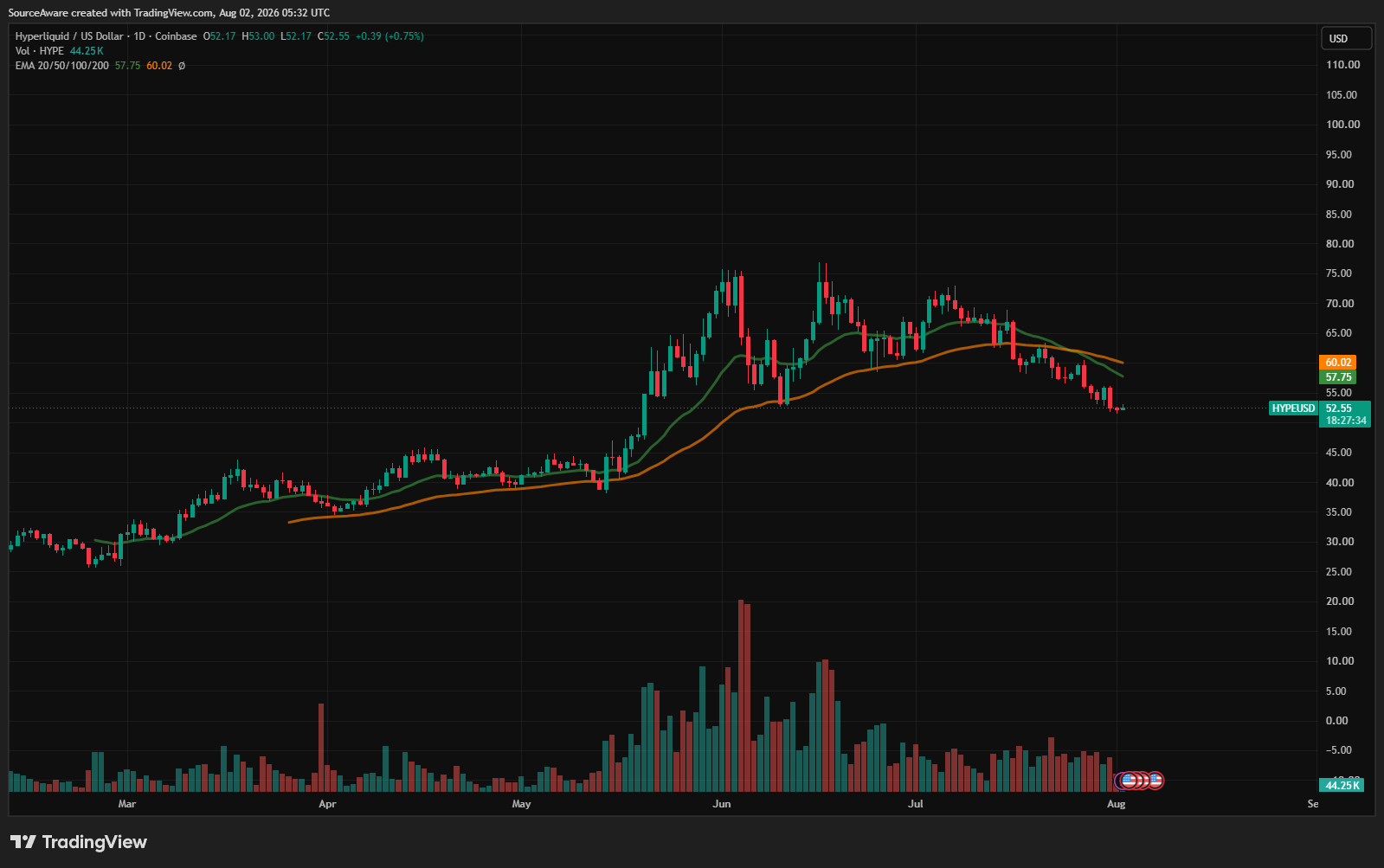
HYPE/USD 1-day chart. Source: TradingView.
Hyperliquid has been one of the stronger performers during this crypto winter period, but its strength also highlights a valuable crypto winter lesson: When the overall market is bearish, strong rallies are to be sold, because eventually, the overarching market sentiment will prevail.
Sui (SUI) shows what a token looks like when it’s been beaten down to its depths. The Coinbase feed showed the token hitting a low of $0.6636 on Saturday, down more than 9.0% from a July 24 open of $0.7440, and 50% from its May high of $1.40. The trades below both the 20-day average near $0.7252 and the 50-day average near $0.7274.
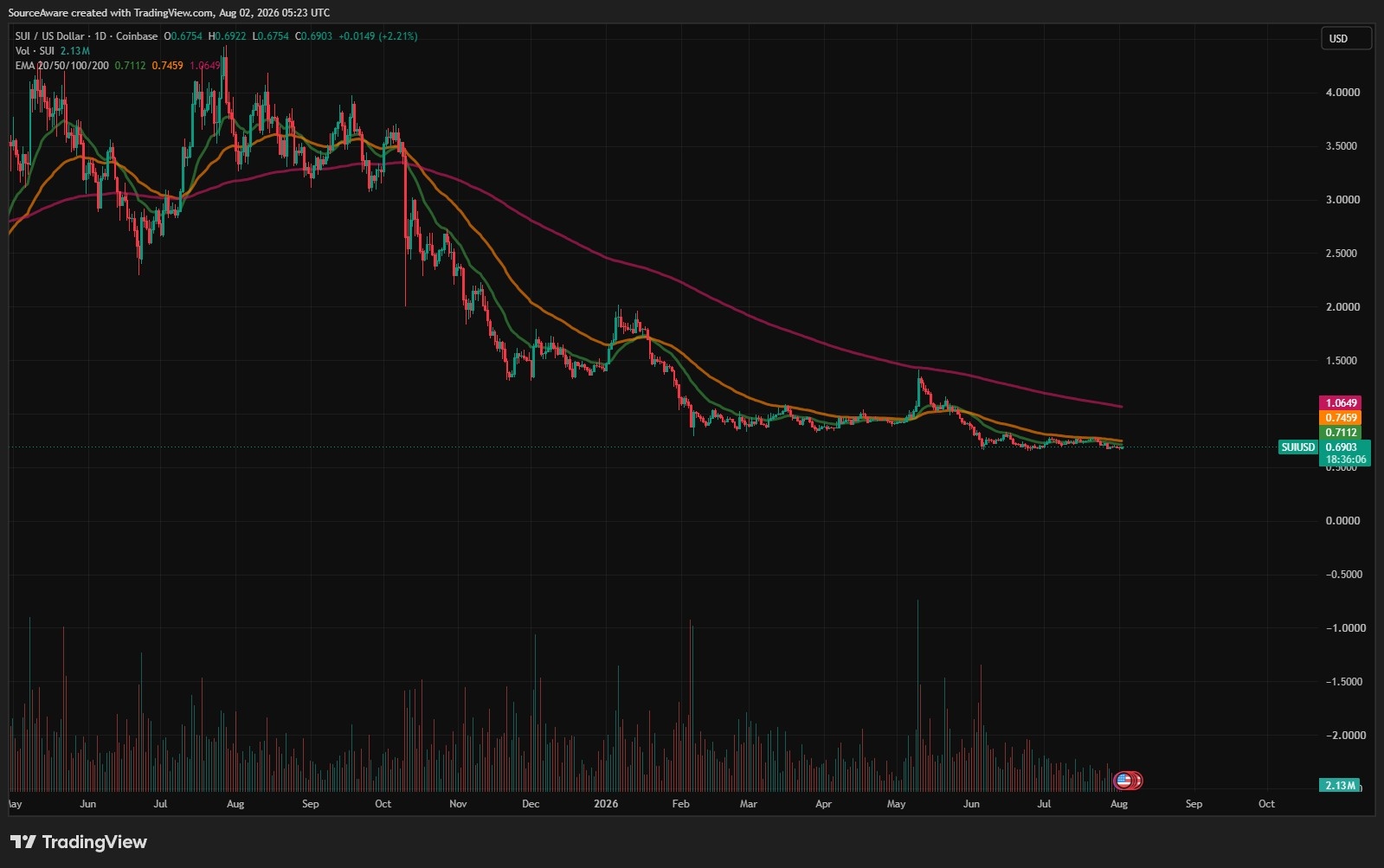
SUI/USD 1-day chart. Source: TradingView.
UNI above both averages, while HYPE and SUI trade below both shows why a single altcoin performance label says little about current participation. As has been the case in the recent crypto winter chop, even assets inside the same broad category continue to trade in materially different conditions.
Breaking Down UNI, ADA, HYPE, and SUI Performance
The comfortable interpretation would treat UNI and ADA as early evidence that capital is rotating toward selective altcoins. The breadth data makes that claim premature. Eighty-two of the top 100 assets were negative over seven days. Two holdouts can reveal where demand is surviving, but they cannot carry the whole market.
But the opposite conclusion can also run too far. Weak breadth and a Bitcoin print below two calculated averages describe pressure at the Saturday snapshot. They do not guarantee another leg lower. Moving averages are reference points rather than mechanical verdicts.
Stablecoin circulation needs the same restraint. A 0.7% weekly decline is directionally consistent with softer participation, but it does not prove money left crypto or that traders lack buying power. Issuance and redemption can change for reasons unrelated to spot positioning. Farside also recorded a $265.4 million net outflow from U.S. spot Bitcoin ETFs on July 31, while spot Ether ETFs took in $9.0 million. One mixed flow day adds caution, not a complete explanation for the market move.
There is also a category trap. ADA strength does not rescue every smart-contract platform, and SUI weakness does not condemn the group. The leader-laggard gap is useful because it breaks the habit of treating an entire sector as one trade.
A broader recovery would challenge the main read quickly. Bitcoin reclaiming the 50-day average near $63,362, followed by improvement in the top-100 breadth count, would suggest the pressure was losing force. UNI holding its advance while AAVE, LINK, or other established DeFi assets begin participating would make its strength look less isolated. ADA staying above both averages while SUI recovers toward its own would narrow the internal L1 split.
The liquidity context could change as well. A rebound in USD-pegged stablecoin circulation would weaken the contraction argument, especially if it arrived with broader participation rather than a single-asset surge. Until several of those conditions line up, selective resilience remains the cleaner description.
What Bitcoin, Breadth, and Stablecoins Indicate for the Next Sessions
The coming sessions should reveal whether UNI and ADA found the first pockets of a wider turn or simply held their ground during a broad retreat. Bitcoin's relationship with support at $62,210 and its calculated moving averages offers one test. Breadth offers another. SUI shows how much work weaker assets still face.
If those signals begin moving together, the market map gets easier to read. If they keep separating, dispersion remains the story waiting for next Sunday.
Ready to trade our analysis of the crypto market? Here’s our list of the best MT4 crypto brokers worth reviewing.