


Silver faces a critical tension as cyclical rate volatility collides with multi-year electrification demand, creating a structural asymmetry that hinges on whether central bank expectations will continue to suppress valuations near-term. This friction point exposes a market psychology split: traders caught between positioning for near-term rate headwinds and recognizing that supply constraints in the energy transition remain persistent. The opening week's price action signals this unresolved divergence, with technical support meeting secular tailwinds in a battle that may reshape positioning into the end of the year.
Top Regulated Brokers
Market Backdrop: Why Interest Rates Matter for Silver Right Now
Interest rate expectations are creating near-term headwinds for Silver valuations, even as structural demand from the energy transition builds a persistent floor beneath the market. The tension hinges on a timing mismatch: short-term rate forecasts are pulling speculative positioning lower, while the multi-year supply tightness tied to renewable energy buildouts and battery demand continues to accumulate. This divergence between cyclical rate pressure and secular demand tailwinds marks the key friction point traders must navigate, as central bank signals may temporarily override supply-demand fundamentals.
The Structural Demand Case
Structural supply constraints are emerging as a persistent floor beneath spot prices, driven by accelerating electrification demand that is outpacing mine production and recycling growth. The energy transition requires silver across three critical channels: renewable energy systems (photovoltaics and inverters), battery storage for grid stability, and semiconductor manufacturing for power management. Central bank reserve accumulation and elevated ETF holdings compound this tightness, creating a multi-year supply bottleneck that may mask how much of the near-term weakness is driven by cyclical rate rotation rather than fundamental demand destruction. This suggests an anomaly in current positioning: consensus is focused on rate headwinds, but physical supply friction could reassert itself if geopolitical disruptions accelerate energy inflation.
Technical Picture
Technical support near the 200-day moving average reflects institutional bid defense, a signal that long-term positioning is intact despite rate-driven selling pressure. However, the clustering of stops and support around this level also creates a vulnerability: a decisive breakdown would accelerate liquidation of carry trades and speculative long positions, potentially pulling the market back toward consolidation zones established earlier in the summer. The monthly and quarterly uptrends remain constructive, but they mask the intraday volatility that rate forecasts are inducing: a dynamic that favors tactical retracements over directional conviction until the Fed's next signal reshapes expectations.
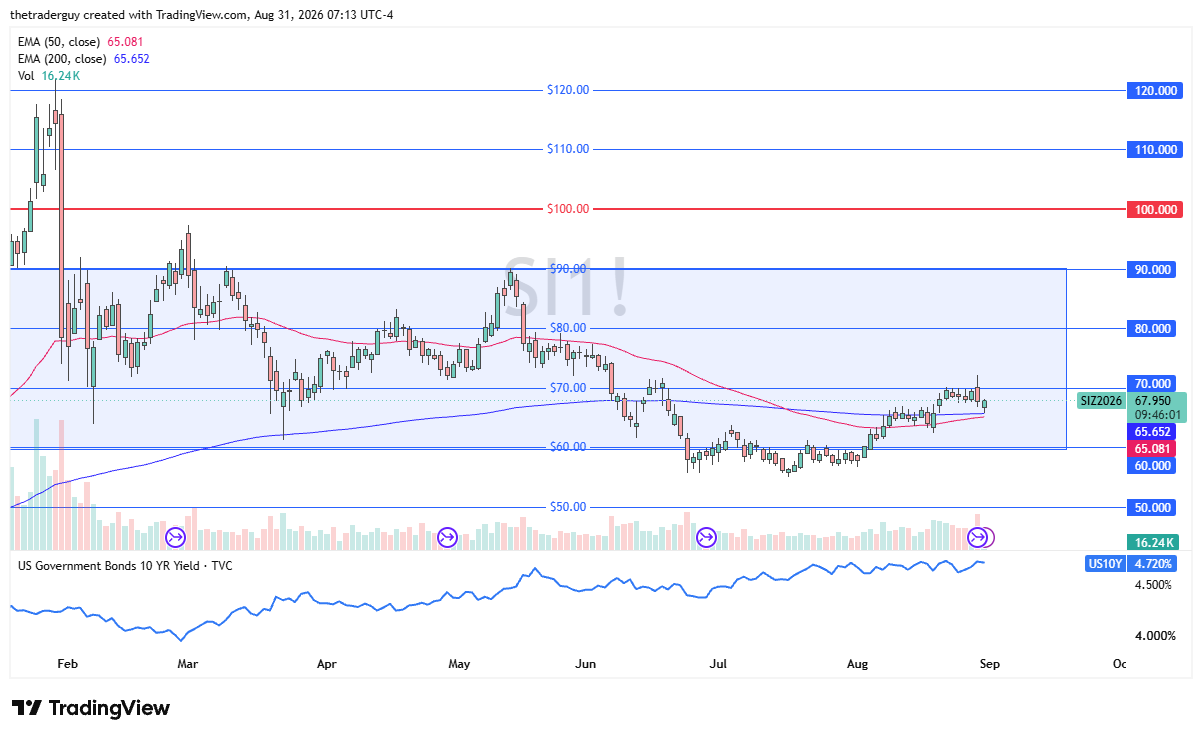 Silver Price Chart
Rate Expectations as the Near-Term Driver
The consensus macro narrative has locked on rate expectations as the primary valve controlling silver valuations, with traders treating yield-sensitive commodity positioning as subordinate to Fed signaling and bond market repricing. However, this framing masks a structural vulnerability: should geopolitical disruptions accelerate energy inflation faster than rate forecasts currently price in, the market would be forced to recalibrate both rate expectations and the supply-driven floor beneath silver simultaneously. The current positioning suggests traders are underestimating how quickly a geopolitical shock or supply bottleneck could reverse the near-term rate headwind, leaving late liquidators exposed. If the Fed signals no imminent rate cuts or employment data surprises to the upside, rate pressure will persist, but any pivot in Fed language could reset the entire positioning almost instantly.
What Could Change the Thesis
A decisive daily close above the $70 level with confirmed volume would invalidate the near-term resistance thesis and suggest that institutional conviction in structural demand is overriding rate headwinds. Conversely, a breakdown below the 200-day EMA with sustained selling pressure would signal that cyclical rate forecasts have reasserted dominance over supply-demand mechanics. Should the next FOMC decision signal no rate cuts or employment data surprise sharply to the upside, rate-sensitive headwinds would persist and potentially extend the consolidation. However, if geopolitical tensions escalate sharply or the Fed pivots unexpectedly toward accommodation, the speed of repricing could overwhelm current technical support levels and reset positioning toward higher targets. The invalidation parameters hinge on data clarity, until the Fed's next signal or an inflation print reshapes rate expectations, traders face ambiguity that will likely persist through the near-term sessions.
Silver's defense of structural support reflects a market caught between cyclical rate pressure and secular electrification demand, creating a friction point that hinges on when central bank signals reshape expectations. The near-term test exposes a positioning asymmetry: consensus has locked onto rate headwinds as the primary driver, but this framing masks how quickly geopolitical disruptions or Fed policy pivots could reassert supply-driven floors. Watch Asia and European session price action to see whether institutional bids hold current technical support or whether the next round of rate expectations forces a retest of lower consolidation zones. The outcome may signal whether structural demand will ultimately outlast cyclical volatility, a question that likely won't resolve until the Fed's next decision or employment data reshapes the macro narrative.
Ready to trade our Silver analysis? Here is our list of the best Silver brokers worth reviewing.