


EUR/USD Remains Near Range Lows Despite a Late-Week Rebound
Top Regulated Brokers
This currency pair tried to recover late in the week after a sharp selloff, but the rebound looked more like caution than conviction. With the market sitting near the bottom of its broader range, traders had every reason to reduce short exposure ahead of a weekend that could bring another round of headlines.
That is the uncomfortable reality for this market right now. It is not simply a question of charts or interest rates. The EUR/USD currency pair is caught between an energy story that could become much more serious for Europe and a U.S. dollar that still has the advantage when traders start thinking defensively.
Why the Current Setup Matters
The late week move higher came as U.S. interest rates softened somewhat and reports suggested that American and Iranian officials were discussing the technical details of keeping the Strait of Hormuz open. That matters, of course, because a disruption there has implications well beyond the oil market. However, subsequent reports suggest the talks have failed, and that Trump may be preparing for a renewal of the war in November.
Europe remains far more sensitive to an energy shock than the United States. If energy supplies become more difficult to secure heading into winter, the pressure on European industry could become substantial, with Germany remaining particularly exposed. That is not a comfortable backdrop for the Euro, especially when investors are already considering whether the European economy can absorb another major disruption.
At the same time, the market had fallen sharply enough that some short covering made sense. Traders did not necessarily want to carry an aggressively bearish position into a weekend when a single geopolitical headline can move energy markets, bond yields, and currencies all at once.
EUR/USD Price Action Shows Limited Confidence
The pair remains close to the lower end of its recent range, and that is probably the most important technical detail. The bounce may have offered some relief, but it did not yet suggest that traders are ready to embrace the Euro in any meaningful way.
Short-term rallies could continue to attract buyers of the U.S. dollar, particularly if American yields begin to rise again. The interest rate differential continues to favor the United States, and that has been difficult for the Euro to overcome. Provided that remains the case, rallies in EUR/USD can be viewed with a healthy degree of skepticism.
The 1.15 level remains an area that could come into focus if the energy situation improves materially and the market starts to believe that the risk to Europe is easing. On the other hand, a move lower could bring the 1.13 level back into the conversation. A break below that area would suggest that the market is beginning to take the downside more seriously again. These are lows that have not been seen for over a year.
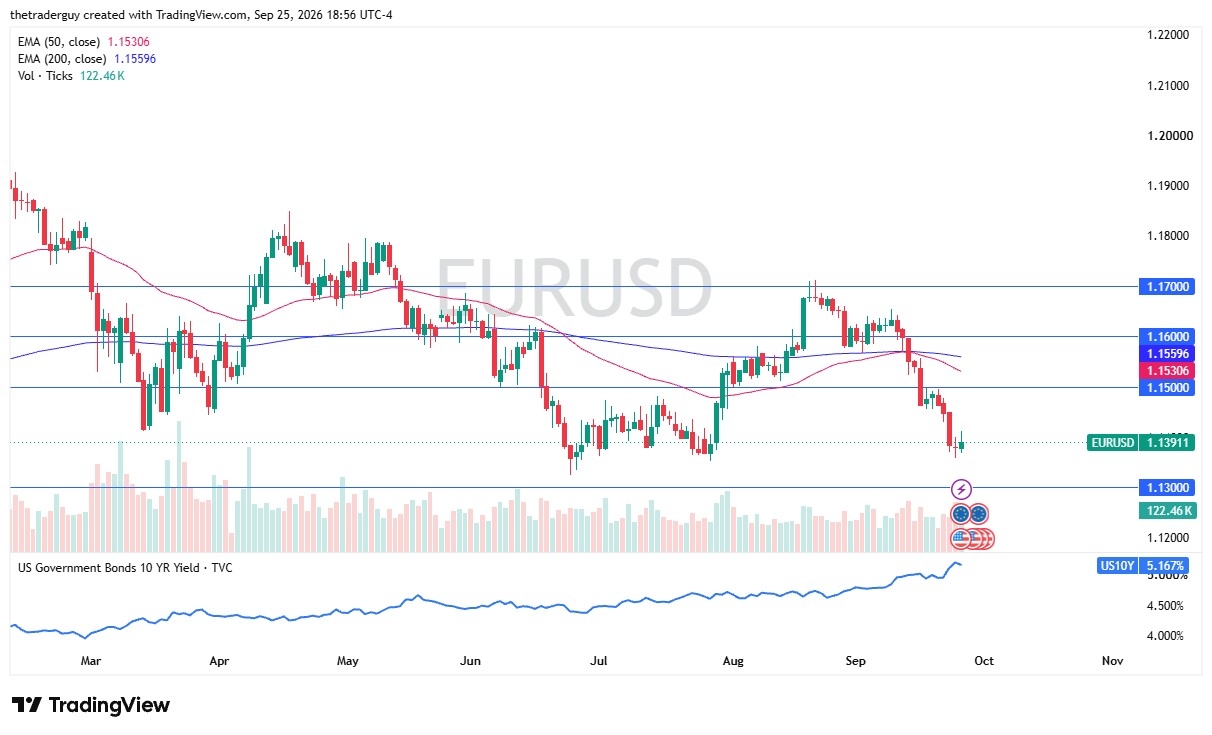 EUR/USD Price Chart
The Risk May Be in the Headlines
The danger for traders is assuming that the situation can be reduced to a simple interest-rate trade. It cannot. The Strait of Hormuz remains a major source of uncertainty, and energy inflation has the potential to alter expectations quickly.
There have been wildly fluctuating headlines and reports concerning the USA/Iran conflict ever since April when the major phase of the kinetic conflict ended, which have tended to whipsaw prices in Crude Oil and anything highly exposed to Crude Oil. Any renewed concern around energy supplies coming from a more aggressive approach from President Trump could weigh more heavily on Europe than on the United States, and that imbalance remains a problem for the single currency.
This is why the EUR/USD pair may continue to look noisy rather than directional. There are competing forces at work: short covering near range lows, changing U.S. yield expectations, geopolitical developments, and the possibility of a much more difficult energy environment for Europe.
What Could Change the Picture
The most obvious alternative scenario is a meaningful improvement in the energy outlook. If markets become convinced that the Strait of Hormuz will remain open and that supply risks are easing, the Euro could recover further as some of the worst-case assumptions are removed from the market.
That would not automatically erase the U.S. dollar’s rate advantage, but it could make it more difficult to sell EUR/USD aggressively near the lower end of the range. A sustained improvement in energy sentiment could put the 1.15 level back on the radar, particularly if U.S. yields continue to soften.
For now, however, the market appears more interested in reacting to developments than committing to a clean trend.
Headlines Remain the Main Driver
EUR/USD is likely to remain sensitive to developments from the Strait of Hormuz, comments from the European Central Bank, and the direction of German and U.S. bond yields. The Federal Reserve’s longer-term rate outlook also remains part of the equation, but the immediate story is the energy market and what it may mean for Europe.
The coming sessions may show whether the recent bounce represents a temporary reduction in bearish positioning, or whether the market is beginning to reassess the risks facing the Euro.
Ready to trade our EUR/USD analysis? Here is our list of the best brokers worth reviewing.