


Top Regulated Brokers
EUR/USD has slipped below another major round number, and the market is clearly taking notice. The euro remains under pressure as the U.S. dollar benefits from higher yields, although the move has not yet turned into the type of disorderly decline that some traders may have expected.
There is still a reason for caution on both sides. European yields have moved higher as well, helping to limit the downside in EUR/USD for now. At the same time, the market is dealing with more than just a technical break. Rates, energy concerns, and geopolitical headlines are all feeding into the same uneasy picture.
Why Yield Differentials Still Matter Most
The central issue remains the interest-rate differential between the United States and Europe. U.S. yields continue to push higher, and that makes the dollar difficult to ignore. As long as the market believes that American rates can stay comparatively elevated, the euro faces a persistent headwind.
The move below 1.13 reflects that pressure. Still, the fact that European yields have risen too may explain why the pair has not simply fallen apart. The spread between the two regions matters more than absolute yield levels, and the euro may find at least some temporary stability if European rates continue to keep pace.
Friday’s U.S. jobs report is the next obvious test. The market is looking for around 90,000 new jobs, and a stronger figure could reinforce the view that the U.S. economy remains relatively resilient. That would likely keep attention on the dollar, particularly after the broader market has shown little appetite for moving away from it.
Price Action Highlights Resistance Near 1.14
The break below 1.13 is technically negative, but it does not necessarily mean that the pair moves sharply lower in a straight line. Currency markets rarely behave that cleanly, especially when a major economic release is approaching.
The 1.14 level now appears to be an important area of potential resistance. A recovery toward that region could attract sellers if the interest-rate differential remains the dominant theme. That is particularly true if the U.S. jobs data supports the idea that the Federal Reserve has little room to become less restrictive.
For the moment, EUR/USD is behaving like a market where rallies may struggle to attract lasting confidence. The downside break favors a continuation of the negative tone, but price action still needs to prove that sellers can maintain control beneath the round number.
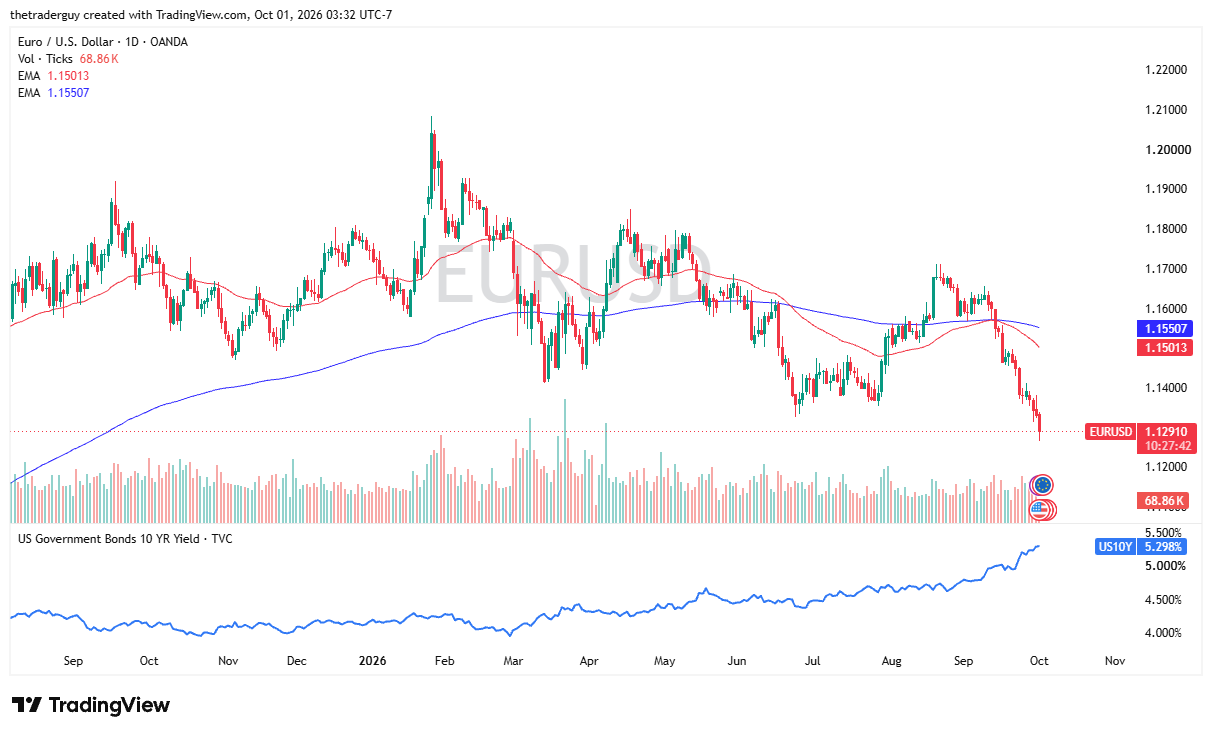 EUR/USD Price Chart
Energy Risks Remain Part of the Story
The euro’s difficulties are not solely about yields. Europe remains far more dependent on imported energy than the United States, and that leaves the region vulnerable when crude oil and natural-gas supply concerns return to the market.
Reports suggest that more oil may be moving out of the Middle East, but the data remain far from clear. A sustained improvement in energy flows could reduce some of the pressure on Europe and offer the euro a measure of relief. However, traders will need more than isolated reports before they become comfortable removing the energy risk from their calculations.
The broader issue is that inflation is not behaving in a way central banks can easily manage. A supply-driven rise in energy costs is largely outside the Federal Reserve’s control. Any meaningful relief may depend more on developments involving Washington and Tehran than on another central-bank statement.
A Softer Jobs Report Could Change the Tone
A notably weak U.S. employment figure could challenge the current dollar-positive narrative. The market has already seen core PCE come in slightly softer, which adds another question for the Federal Reserve as it tries to assess inflation that is not entirely driven by domestic demand.
A weak jobs report would not automatically erase the rate advantage held by the United States. However, it could prompt traders to reconsider whether U.S. yields have moved far enough for now. If that happens while European yields remain firm, EUR/USD could find room for a rebound from current levels.
That remains the alternative case. The market still appears more comfortable favoring the dollar, and the euro needs a combination of softer U.S. data and improving energy expectations before sentiment changes in a meaningful way.
What Traders Are Watching Next
EUR/USD remains a market driven by several closely connected factors: the direction of U.S. and European yields, developments in energy markets, economic data from Germany, France, and the United States, and the latest price behavior below 1.13.
The coming sessions may show whether the break beneath this major level develops into sustained selling pressure or whether rising European yields and a softer U.S. data point offer the euro a chance to stabilize.
Ready to trade our EUR/USD analysis? Here is our list of the best brokers worth reviewing.